Tuesday, September 29, 2009

Ultima Pregunta - Brasil Day 3 & 4

photo courtesy of Diego Moreno
Fifty years ago the neighborhood of Ibicuitaba was flooded by sand, and the roofs peeked out. The wind eventually blew feet of red sand away, and only the church and one other building survived. Freitas, a local historian, looks like a surfer but speaks of Icapui's history as if he were another grandfather in his porch hammock. He takes us from the oldest -- the grave of a communist rebel, to the youngest, a secondary school.

Watching children climb trees and jump elastics (extreme double dutch) I can't tell who is descended from negra, branco or indio. And when we talk, I don't think they know either.Their hair is blonde, brown and black-- tightly curled or silky straight. Their features tell of their Portuguese great grandfathers, but sometimes of natives and sometimes of Angolan slaves.

Lynsey and I came to Brasil armed with textbook definitions of racism, but they dissolve in the playground noise within hours. When a young theater group pulls on fake afros, sequins skirts and performs a play on slavery and African ancestry, their painted faces, their voices transform from mischevious and shy to confident leaders of an ancient rebellion.
I interview some of the teenagers and soon our chatting turns to dancing, and I am learning the Forro, awkwardly watching my feet and trying not to step on the feet of my 15-year-old partner, Rodrigo. When we are done he ties a braided bracelet on my wrist.

I thought that I would run out of questions after back to back days of 8 a.m. to 5 p.m. conversations, but my curiosity runs strong and I continue to discover the heart of the beach and hills.

Sunday, September 27, 2009

Bom Dia - Brasil Day 1 & 2

photo courtesy of Diego Moreno

Icapui, Ceara, Brasil.

It's the end of the day and my cheeks are well kissed, my arms tanned and my hair tale-telling of a day in the wind. Our story has gone from a couple Word documents and library research to real faces, and dancing and homes. The theatre groups that comprise our sources have handed us a story, their chubby babies and a deeper look into this spirited town.

Our Brasilian translators are fast friends, and we've spent the day sharing meals and stories. Since Diego and Natalia are from Fortaleza, a major city, the dusty, fisherman's Icapui is new for them too, and we discover together with our notebooks and cameras and wide eyes.

I try to blend in and sometimes it's not hard because my hair and my skin could be native. But then I open my mouth and try to answer rapid Portuguese and I am suddenly, obviously American.

I wake with music playing in our hotel -- an open and sandy row of simple rooms. The Brasilians in Icapui dance like me, anytime and anywhere. They smile and hug and tell us stories because they think we should know. We should know why their fishing industry is in trouble, and what stories their mother told them in the womb, and why chicken hearts on a stick are a delicacy.

But the end of the day feels like the end of four. Boa Noite.

Tuesday, September 22, 2009

ETA

I was sitting in my Florida FlyIns class (group that I'm going to Brazil with) and listening to Professor Machado tell us about the Brazilian concept of time, and how one hour can mean three.

Well, I'm used to that, I thought. Indians have their own IST (Indian Standard Time) -- some kind of inherited trait that requires that we arrive at 9 p.m. to a 6:30 p.m. dinner party. For some of my friends, it's more than the usual hour -- they ring my doorbell at midnight and then leave for another party after hanging out for a while. And I remember a Jewish friend saying that his family has some form of this too.

When I was staying in Florence, Italian stores would pull down their aluminum shutters for lunch and return sometimes three or four hours later without notice. "American's work too much," a vendor told me one time when I asked about their inconsistent store hours. "They work all year, all day for just one expensive week in some exotic place. We Italians take these little vacations all the time, every day."

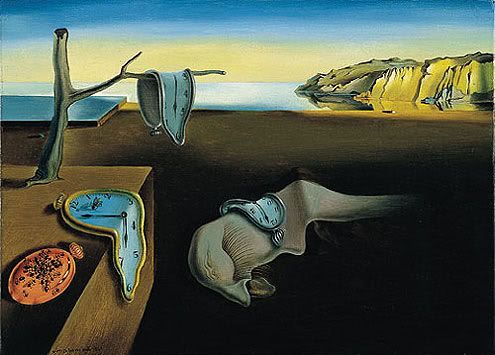
So if Brazilians, Italians, Latin Americans, Jewish families and Indians all see the clock like the ones in surreal Dali paintings, and time as relative, who exactly is getting places on time? An Irish friend I met in Barcelona told me that he loved German trains because they were on time, all the time. One of my high school friends spotted me rushing into the movie theater late and said, "Oh don't give me that culture crap, the movie started already." The 9-to-5 job schedule seems to have been written in the American Constitution.

I'm thinking about this today because my application for a Brazilian tourist visa was supposed to come to me two weeks ago and after many palpitations, e-mails and post office visits, should be in the mail tomorrow. But I have to admit that if my friends and family were running a consulate, it might have taken another year.

Monday, September 7, 2009

My Summer with Inspire


I feel like my summer with Inspire is only valid with a soundtrack.